Ask five people in Kuala Lumpur how far in advance to book an event management company, and you’ll get five different answers — because the honest answer depends on your venue, your guest count, and how many vendors need to line up behind that date. Most “book early” advice gives you one generic number and calls it a day, which is exactly why so many corporate teams end up scrambling in September for a December dinner date. Lead time isn’t one figure. It’s a chain: venue deposit first, then vendor pre-booking, then enough runway for a proper rehearsal before doors open. Here’s how to actually plan your booking window, event type by event type.
Andrew Chu is Technical Event Director at Shockwave, with 17 years and 1,000+ events across Malaysia.

Quick Takeaways
- Large corporate events need 3–6 months’ notice
- Small simple events can work in weeks
- October–December is KL’s tightest booking window
- Book venue first, vendors and production next
- Late bookings mean rushed fees, fewer choices
Why “How Far in Advance” Doesn’t Have One Answer
Every “how far in advance” question really has three sub-questions hiding inside it: how big is the event, how in-demand is the venue you want, and how many vendors have to be coordinated before doors open.
Event size matters because complexity doesn’t scale in a straight line. A 50-pax executive dinner and a 500-pax gala both need a venue, catering, and AV — but the gala also needs staging, a run-of-show with multiple cues, and enough rehearsal time to catch problems before guests arrive. More moving parts means more sequencing, and sequencing is what eats up your calendar.
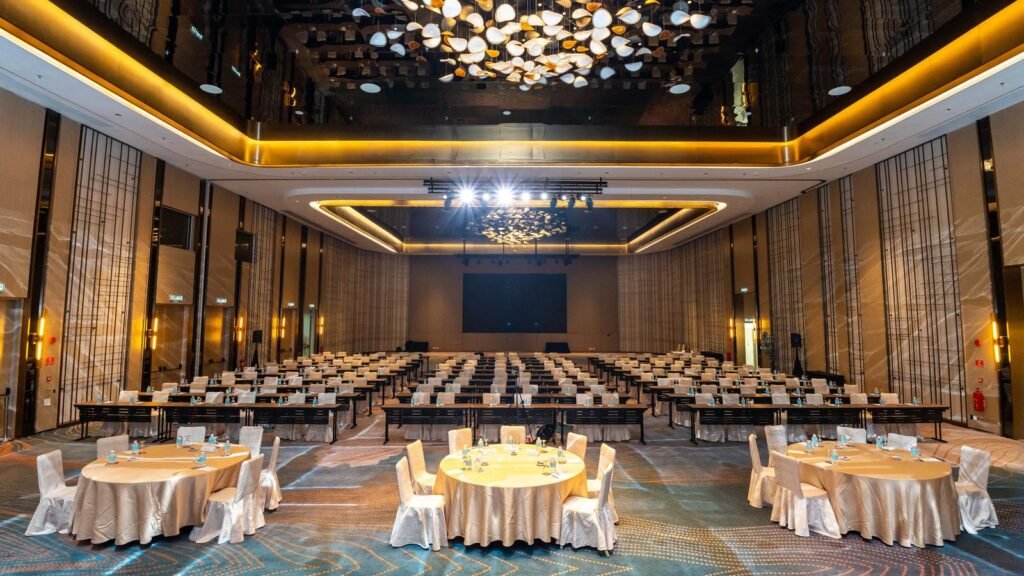
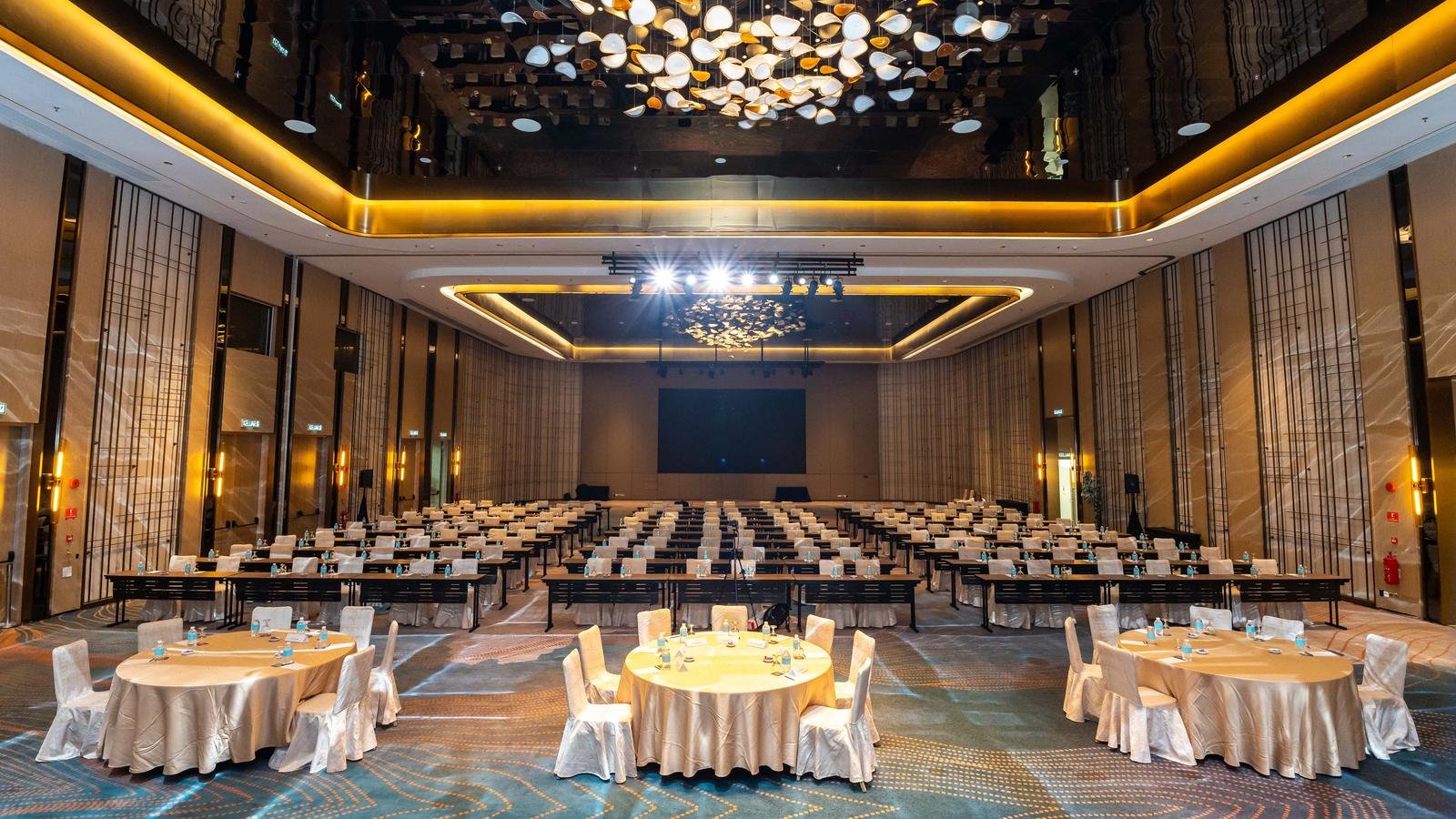
Venue tier matters because popular Kuala Lumpur ballrooms don’t sit empty waiting for you to make up your mind. A well-located five-star ballroom — think properties like the St Regis Kuala Lumpur or Hilton Kuala Lumpur — can be held on a handful of dates a year for your preferred day of the week. (Venue packages, halal status, and AV capabilities change — always confirm directly with the venue.) Book late, and you’re choosing from what’s left, not what you wanted.
Vendor complexity matters because AV, staging, entertainment, décor, and photography each have their own booking calendars. A single vendor might flex on short notice; five vendors who all need to confirm around the same date rarely do.
So instead of asking “how many weeks do I need,” ask how big this is, how contested the venue is, and how many suppliers it depends on. That question gives you a real answer — the table below turns it into one.
Lead Times by Event Type: A Practical Breakdown
Here’s a practical starting point by event type — treat it as a floor, not a guarantee:
| Event Type | Typical Lead Time | Why It Takes That Long |
|---|---|---|
| Large corporate event (conference, major dinner) | 3–6 months | Venue demand plus multiple vendors to sequence |
| Gala or annual dinner, peak season (Nov–Feb) | Around 6 months | Peak-season ballroom dates go first |
| Product launch (full production) | Toward the fuller end of 3–6 months | Concept, venue, staging and media must land in sequence |
| Small or simple event (briefing, small dinner) | 4–8 weeks | Fewer vendors, simpler venue requirements |
| Standard hall or ballroom hold, no major production | 8–12 weeks (4–6 weeks for a weekday slot) | Venue calendar alone, before any vendor is even confirmed |
These ranges reflect how Kuala Lumpur’s event and venue market actually books. Published KL planning guides advise 3–6 months for major events like conferences or large dinners, and 4–8 weeks for smaller ones. For peak-season gala dinners specifically, the safe window is around 6 months ahead, or 4–6 months for large corporate events generally. On the venue side alone, Klang Valley venue listings give 8–12 weeks as the safe hold for a hall or ballroom date, tightening to 4–6 weeks for a standard weekday session.
Book the Venue First — Then Everything Else Falls Into Place
A venue deposit is the single move that actually buys you time. The moment it’s signed, you can start pre-booking vendors against a real date — AV, staging, entertainment, and catering can all be provisionally held once the venue is locked. Skip that step and everything downstream stays tentative.
But locking a venue too fast, on ballroom size alone, causes its own problems. After 17 years assessing venues across Kuala Lumpur, we check five things before recommending one:
Before signing a venue contract, check these five things — not just ballroom capacity:
- Loading bay access — can trucks reach the hall without blocking hotel traffic or other events?
- Ceiling rigging points — is there structure to hang lighting and screens, or does everything need floor-based support?
- DB power capacity — enough dedicated power for AV and staging, without tripping the venue’s own systems?
- Backstage holding areas — space for performers, speakers, and equipment to stage before they’re needed on the floor?
- Guest traffic flow — do registration, dining, and stage sightlines work together without bottlenecks?
On one Kuala Lumpur project, this kind of check caught a rigging and loading-bay mismatch that venue photos alone never showed — the kind of problem that’s cheap to fix before signing and expensive to fix after.

Why October to December Is KL’s Tightest Booking Window
Kuala Lumpur’s corporate calendar has a bottleneck, and it isn’t really about the calendar — it’s about how many companies are trying to close out the year the same way, at the same time. Year-end dinners, award nights, and appreciation events cluster into the last quarter, and venues aren’t the only thing that runs short. AV crews, stage and lighting suppliers, entertainers, and even signage printers all get booked against the same dates.
For gala dinners specifically, published planning guides put the safe booking window at around 6 months ahead once you’re inside peak season (November through February). That’s not a scare tactic — it’s simply how many companies are chasing the same Friday and Saturday ballroom slots.
If you’re starting late into that window, the fix isn’t to panic — it’s to widen what you’re flexible on. A weekday date, a slightly smaller venue, or an in-house AV team instead of a specialist crew can all still work. What rarely works is holding out for a specific five-star ballroom on a specific Friday in December while starting the search in October.
Product Launch Timeline: What Happens in Each Phase
A product launch rarely fails because of one bad decision — it fails because phases got compressed on top of each other instead of running in sequence.
A product launch typically moves through four phases, each depending on the one before it:
- Concept and venue lock-in. The launch narrative, format, and venue get decided together — a venue that can’t support your staging concept forces a redesign later, at a worse time to redesign.
- Staging and AV scope. Once the venue is fixed, staging, lighting, and AV get scoped against its actual rigging points, power capacity, and floor plan — not against a generic spec.
- Media and content production. Launch videos and keynote decks get built and tested against the actual playback system the event will use, not just on a laptop in someone’s office.
- Rehearsal and technical recovery window. This is the phase most launches shortchange. Presentation files and launch videos have a habit of arriving minutes before doors open, often with codec or font issues that only surface on the live playback system. A rehearsal window with time to catch and fix that — not just walk through the run of show — is what keeps a technical hiccup invisible to the audience instead of a visible stumble on stage.
Skip straight from concept to rehearsal without the middle two phases properly resourced, and rehearsal becomes the first time anyone discovers a problem — with no time left to fix it.

Can You Still Book an Event Company Last-Minute?
Short notice isn’t automatically a dead end — but what’s rescuable and what isn’t follows a fairly consistent pattern.
What can often still work on short notice:
- A smaller guest count with a simple venue and no custom staging
- A hotel in Petaling Jaya or Subang, rather than a fully booked KLCC property
- A weekday date rather than a Friday or Saturday, which frees up both venue and vendor calendars
- A straightforward briefing or townhall without a full run-of-show
What’s genuinely hard to rescue on short notice:
- A specific premium venue on a specific popular date — especially in peak season
- Custom staging, branded fabrication, or bespoke décor that needs build time
- A proper rehearsal window — usually the first thing sacrificed when timelines compress
- Coordinating five or more vendors who each need their own confirmation and lead time
The honest answer to “can you do this in three weeks” is usually “yes, if you’re flexible on venue, date, and scope” — not “no.” What late bookings actually cost you is choice, not possibility.
What You Actually Lose by Booking Too Late
Booking late doesn’t usually mean an event falls through — it means the event you get looks different from the one you’d have gotten with more lead time.
The venue shortlist shrinks first. Instead of choosing between three or four properties that fit your brief, you’re often working with whichever one or two still have your date open. Vendor quotes tend to carry rush surcharges, because suppliers are reshuffling their own schedules to fit you in. Material and staging choices narrow to whatever’s already in stock, rather than what best suits your brand or theme.
The loss that matters most, though, is rehearsal time. When a launch video arrives with playback issues, or a run-of-show needs a last-minute adjustment — a VIP guest added at short notice, a dietary or prayer-time change to the dinner flow, a speaker running long — a proper rehearsal window is what catches it quietly, before guests are in the room. Compress that window, and those same problems surface live, in front of an audience, instead.
Ready to Plan Your KL Event on the Right Timeline?
Whatever stage you’re at — early scoping or an already-tight date — talk to our team about what’s realistically possible for your event.
Frequently Asked Questions
How far in advance should I book an event management company in KL?
For major corporate events like conferences or large dinners, plan on 3–6 months of lead time; smaller, simpler events can often work with 4–8 weeks. The right answer depends on your venue tier and how many vendors need coordinating.
How many months in advance should I book a hotel ballroom for an annual dinner in KL?
Popular Kuala Lumpur ballroom dates for peak-season gala dinners are often locked in around 6 months ahead. If you’re eyeing a Friday or Saturday toward year-end, start venue conversations well before mid-year.
Do I need to book earlier for a year-end corporate dinner in Kuala Lumpur?
Yes — October to December is Kuala Lumpur’s busiest corporate season, and it’s not just venues that fill up; AV, staging, and entertainment vendors get booked out too. Coming in late usually means a smaller pool of choices, not zero options.
Can an event company in KL still take a last-minute or urgent booking?
Sometimes — a smaller guest count, a hotel’s in-house AV team, or a weekday date can still work on short notice. What’s genuinely hard to rescue late is a specific premium venue, custom staging, or a proper rehearsal window.
How early should I book an exhibition booth contractor before a trade show in Malaysia?
Booth design, fabrication, and installation all have to fit before the show opens, so exhibition contractors need meaningfully more notice than a one-day event. Booking late usually means rushed fabrication and whatever materials happen to be in stock.
What is a realistic planning timeline for a product launch event in Malaysia?
A product launch needs more runway than a standalone dinner because concept, venue, staging, and media all have to land in sequence before rehearsal. Start with venue and production scope early — leaving room for a proper technical rehearsal is what late bookings sacrifice first.
What is the minimum lead time for a small or simple corporate event in Malaysia?
For a simple briefing, townhall, or small dinner with a straightforward venue, 4–8 weeks is often workable. The floor gets tighter the more vendors or custom elements — AV, décor, entertainment — you add.
How much deposit do I need to pay to secure my event date in Malaysia?
A deposit is what actually locks in your date — it secures the venue hold and lets your event company start pre-booking vendors against that date. Ask your venue and event company what their deposit structure requires, since it varies by property and season.
What happens if I book an event company too late in Malaysia — what do I lose?
Booking too late usually means a smaller shortlist of venues, rush surcharges from vendors, and less choice in staging materials or entertainment acts. The biggest loss is often time for a proper rehearsal, where technical hiccups get caught before guests arrive.
How far ahead should I book a team building event or venue for a large group in Malaysia?
Larger groups — say 50 to 200 pax — need more lead time to coordinate venue capacity, catering, and enough facilitators to run breakout activities smoothly. Smaller teams under 50 pax generally have more flexibility on both venue and timeline.
External References