Category: Corporate Event Planning Guides

  • Annual Dinner Venue in KL Fully Booked? Here’s What to Do

    Annual Dinner Venue in KL Fully Booked? Here’s What to Do

    Your preferred annual dinner venue in KL just came back fully booked — every date in December, gone. It’s a familiar scramble: good venues in the city are often booked three to six months ahead of peak season, and once that window closes, planners either overpay for whatever’s left or downgrade a dinner nobody remembers fondly. It doesn’t have to go that way. This guide walks through how to reassess what your event actually needs, widen the search for an alternative past the usual hotel ballrooms, and negotiate a backup venue on your terms instead of theirs.

    Written by Andrew Chu, Technical Event Director at Shockwave — 17 years and 1,000+ events across Malaysia.
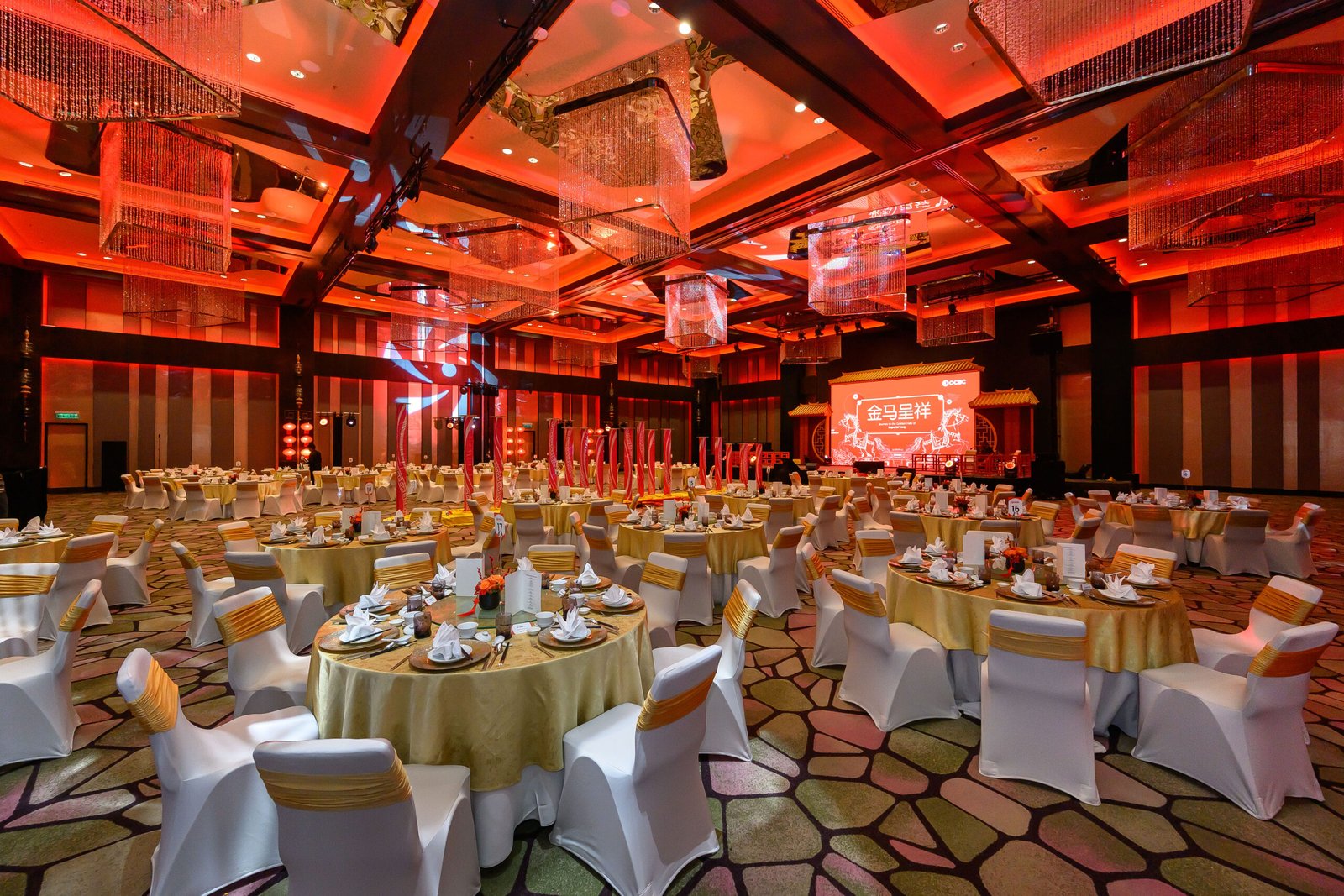
    Professional CNY gala dinner ballroom setup with elegant gold and white table decor under dramatic red LED lighting, ready
    Professional CNY gala dinner ballroom setup with elegant gold and white table decor under dramatic red LED lighting, ready

    Quick Takeaways

    • Widen search beyond hotel ballrooms fast
    • Check loading bay before booking anything
    • Restaurants suit smaller, simpler dinner formats
    • Confirm halal status directly with venue
    • Get deposit and transfer terms in writing
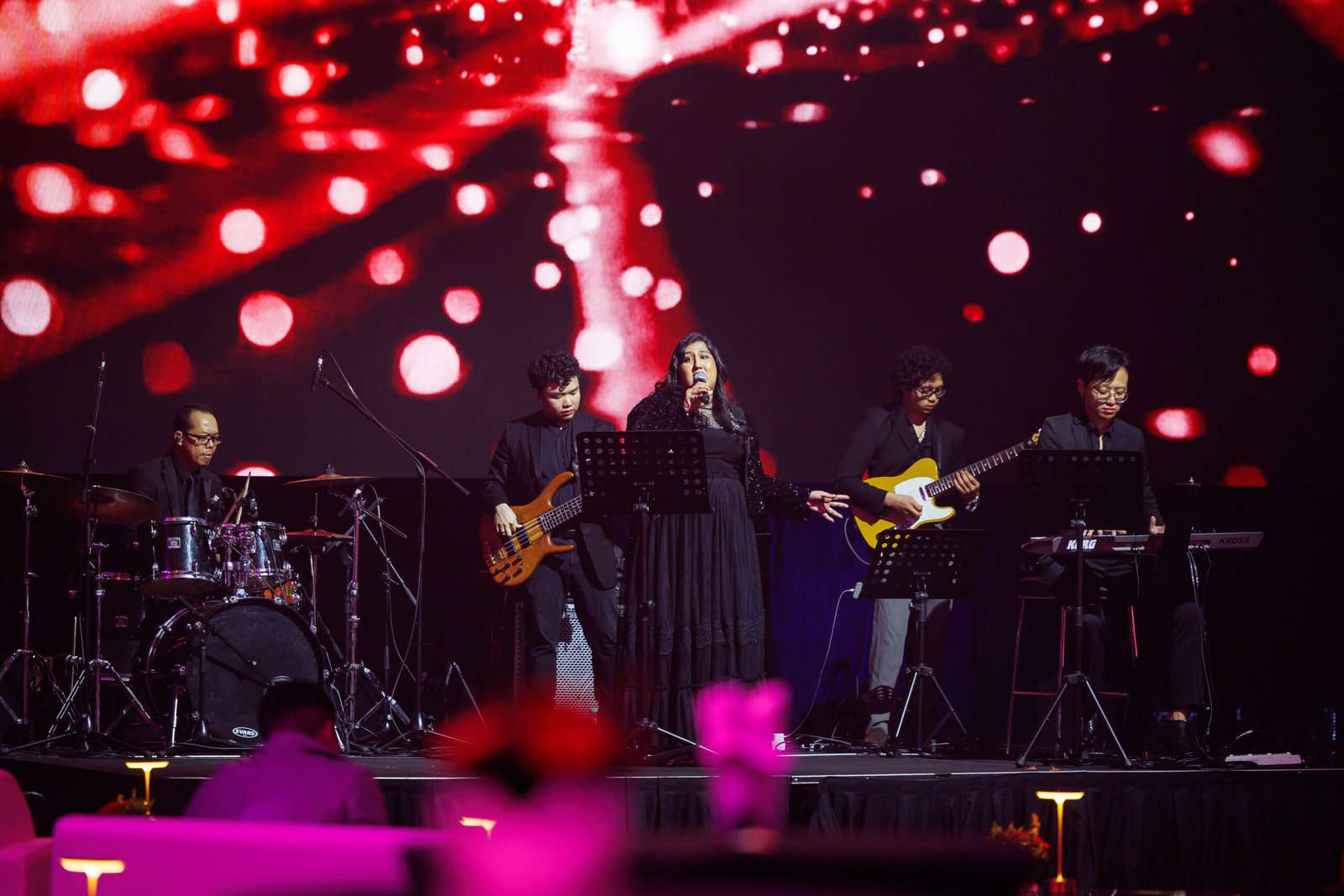
    Live band performance on stage with dramatic red bokeh backdrop and pink table lighting; five musicians performing at gala
    Live band performance on stage with dramatic red bokeh backdrop and pink table lighting; five musicians performing at gala

    Why Venue Selection Matters More Than Headcount

    When your first-choice venue falls through, the instinct is to search using the same filters that got you nowhere the first time: capacity, price per pax, availability on the date. That’s how planners end up in a backup venue that looks fine on paper and falls apart three hours before doors open.

    A ballroom that seats 300 comfortably for a sit-down dinner might have a loading dock built for banquet trolleys, not truss and staging. A function room in Bangsar might quote a great rate but have a service lift too small for your LED wall crates. Headcount tells you if people fit in the room. It tells you nothing about whether the room can carry your production.

    The planners who move fastest under pressure flip the filter. Instead of asking “can this venue hold my guests,” they ask “can this venue carry my show.” That means getting a floor plan and a rigging plot before confirming a date — not after. A restaurant private room and a convention hall can both technically “fit” 150 pax. Only one of them can run a live emcee segment with proper sound reinforcement and a video wall without compromise.

    Reassess what your event actually needs first. Then search for the room that can hold it.
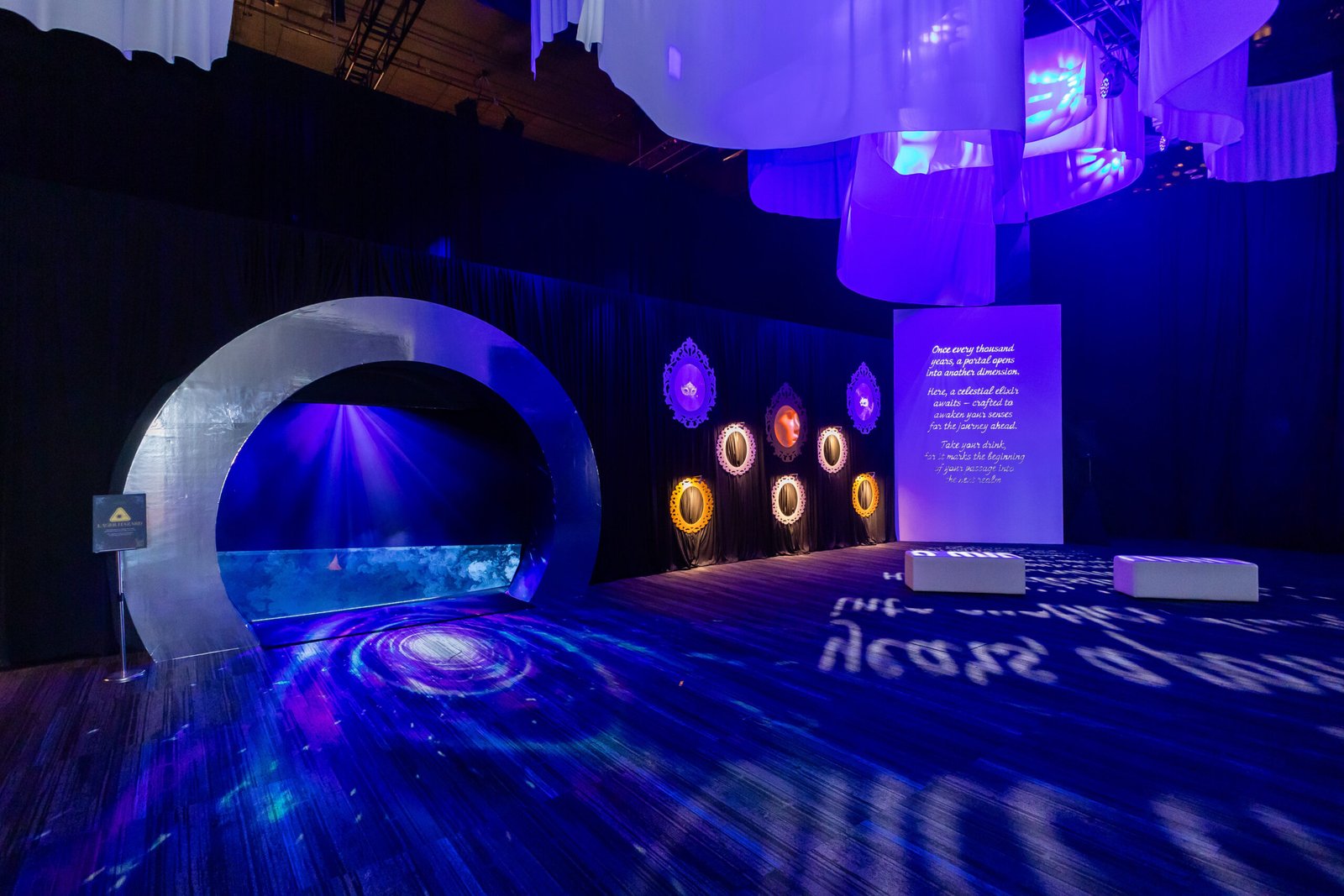
    Stellar Masquerade gala stage with elaborate purple-neon lighting, sculptural arch installation, and celestial medallion
    Stellar Masquerade gala stage with elaborate purple-neon lighting, sculptural arch installation, and celestial medallion

    5 Technical Factors That Determine Event Feasibility

    Check these five technical factors before recommending any backup venue — the same checklist used whether it’s a five-star ballroom or a converted warehouse:

    • Loading bay access. Can a truck reverse straight to the service lift, or does every truss and crate have to come up in pieces through a narrow corridor? This alone can add hours to your load-in window.
    • Ceiling rigging points. A quoted ceiling height means nothing without a rigging plot. No rigging points means lighting and sound sit on ground-supported stands, which shrinks what your stage design can do.
    • Power capacity at the stage. Three-phase power at the stage is the difference between a clean show and a tripped breaker mid-programme. Ask for the DB location and capacity, not just “yes, we have power.”
    • Backstage and holding space. If your programme has an awards reveal, VIP arrival, or a costume change, you need somewhere for that to happen out of guest sightlines. Some ballrooms genuinely have none.
    • Guest traffic flow at peak arrival. Walk the path from car park or lift lobby to the ballroom entrance at the time your guests will actually arrive — not during a quiet afternoon site visit.

    Many first-time planners only check the first two — capacity and price — and discover the rest on event day, when it’s too late to fix. Run through all five before signing anything.

    Venue Tiers: Premium International / Industrial / Regional / Mall-Based

    Once your search widens, group candidates into tiers by what they’re built for, not by star rating. Each tier trades off differently against the five factors above.

    A premium international 5-star hotel ballroom in KL Sentral or KLCC usually has mature in-house AVL, strict noise and curfew rules, and catering you can’t bring in from outside. A mall-based convention centre in PJ or Sunway tends to have generous loading access and flexible external vendor policies, but parking and guest flow can get chaotic during mall operating hours. A regional 4-star hotel often has strong food and a lower base rate, but runs a BYO production model — you bring in most of your own AVL rather than relying on the house system. A converted industrial space, like a warehouse in Shah Alam or Klang, gives full creative control over layout and staging, but almost nothing is built in — power, rigging, even air-conditioning may need to be brought in.

    Compare candidates on what they can support, not what they cost:

    Factor Premium International 5-Star Mall-Based Convention Centre Regional 4-Star Hotel Industrial / Warehouse
    AVL maturity High — in-house system Moderate — venue-dependent Low — BYO expected None — fully external
    Catering flexibility Low — in-house only Moderate Low to moderate High — full outside catering
    Parking & loading Moderate Variable, mall hours matter Moderate High — but confirm dock specs
    Guest flow control High Depends on mall traffic High Full control, more setup work

    Match the tier to what your programme actually needs, not to prestige.

    Common Venue Selection Mistakes

    1. Quoting a per-pax budget before walking the loading bay. Price the room once you know it can carry your production, not before.
    2. Assuming ceiling height means rigging capacity. Always ask for the actual rigging plot, not a number off a spec sheet.
    3. Booking on availability alone. A date being free isn’t the same as the venue being right for your show.
    4. Skipping the site visit at the actual arrival time. A quiet afternoon walkthrough hides guest flow problems that only surface during peak arrival.
    5. Not confirming halal status directly with the venue or caterer. Ask outright rather than assuming from general reputation.
    6. Signing before reading the cancellation and date-transfer clause. Some contracts allow a rebooking credit if plans change; others are hard non-refundable.
    7. Forgetting backstage needs until programme rehearsal. VIP holding, an awards reveal, or a costume change all need space you should confirm before signing.
    8. Treating deposit terms as fixed. Deposit percentages and transfer terms are usually negotiable, especially off-peak — ask.

    Action Checklist

    ✅ List your non-negotiable production needs before searching — stage size, AV load, backstage space.

    ✅ Walk the loading bay and request a rigging plot for every shortlisted venue.

    ✅ Confirm DB power capacity at the stage location, not just “power available.”

    ✅ Check guest traffic flow at the actual time your guests will arrive.

    ✅ Confirm halal status directly with the venue or caterer.

    ✅ Get 3–4 quotes in parallel rather than negotiating one venue at a time.

    ✅ Read the deposit, cancellation, and date-transfer clause before signing anything.

    ##### Suggested Internal Links

    Frequently Asked Questions

    ###### Q: What should I do if my company’s preferred annual dinner venue in KL is already fully booked? A: Widen your shortlist immediately to restaurant private rooms, convention centres and non-hotel spaces — they often have dates a hotel ballroom doesn’t. Check loading bay access and power capacity before signing, not after.

    ###### Q: How many months in advance should I book a corporate annual dinner venue in Kuala Lumpur? A: Good venues in KL are typically booked 3 to 6 months ahead of peak periods, especially for December dinners. Lock your date early — even a tentative hold protects you from the year-end rush.

    ###### Q: Are there halal-certified venues in KL and Selangor suitable for a large company dinner? A: Yes, but “halal-certified” isn’t a reliable filter by itself. Confirm the venue’s or caterer’s halal status directly, and match it against your actual catering and capacity needs.

    ###### Q: Can I still get a good annual dinner venue in KL if I’m booking last minute? A: Last-minute bookings are harder but not hopeless — cancellations happen, and smaller or lesser-known venues often still have capacity. Move fast, stay flexible on the exact date, and get quotes from 3–4 options in parallel.

    ###### Q: Why do all the good annual dinner venues in KL get fully booked by August for a December event? A: Peak season for annual dinners in KL runs roughly mid-October through mid-December, the same window as weddings and year-end launches, so good dates disappear fast. Booking by August protects your date and your rate.

    ###### Q: Are restaurants a good backup for a company annual dinner if the hotel ballroom is unavailable? A: Restaurants are often faster to secure and simpler to manage, which makes them a solid backup. But private rooms usually cap your staging and AV ambition, so weigh that trade-off if a full production show matters.

    ###### Q: Is my venue deposit refundable if I need to cancel or change the date? A: It depends entirely on the venue’s contract — some allow date transfers or rebooking credit, others are hard non-refundable. Read the cancellation clause before signing, and ask directly whether a transfer is possible.

    ###### Q: How much does an annual dinner cost per person in KL? A: Budgets vary by venue tier: roughly RM150-200 per pax at mid-tier 4-star hotels with basic entertainment, RM250-300 for 4-star with full production, and RM400+ at 5-star with custom staging. It varies significantly based on scope, scale, and customisation.

    ##### Ready to Plan Your Backup Venue?

    If your preferred date fell through and you need a venue that can actually carry your production — not just seat your guest count — we can help you shortlist and assess options fast.
    External References

  • In-House Events Team vs Event Management Company Malaysia

    In-House Events Team vs Event Management Company Malaysia

    Every growing business in Kuala Lumpur eventually asks the same question: build an in-house events team, or bring in an event management company for each project? Most founders and HR heads compare it on gut feel — a full-time hire feels “safer,” an agency feels “expensive.” But the honest in-house events team vs event management company Malaysia comparison isn’t about preference. It’s a fixed-cost-versus-variable-cost problem, and the numbers most people skip — statutory on-costs, agency fee structures, and the hidden costs of running events without production experience — are what actually decide it. Here’s how to run that comparison properly.

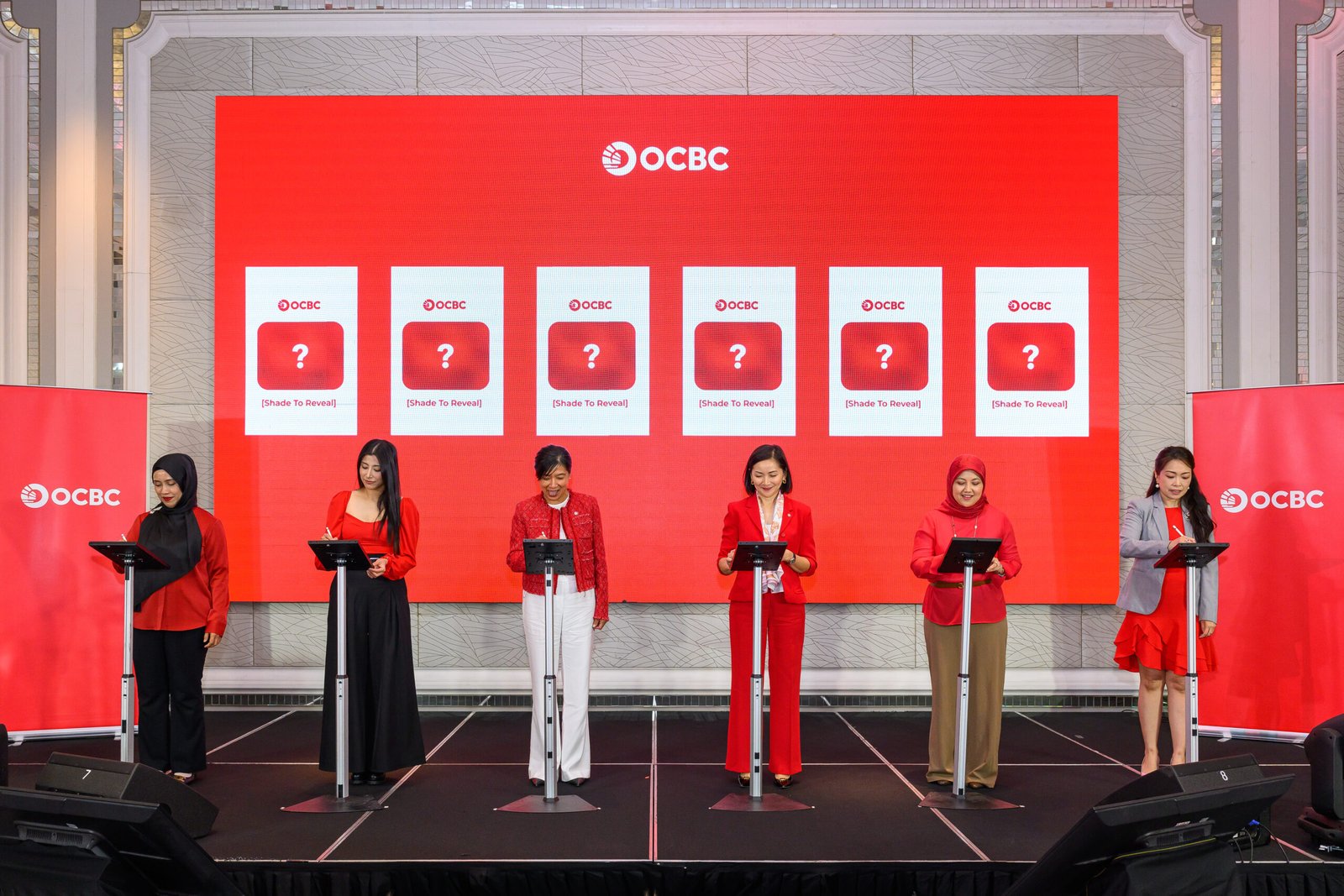
    Six women on OCBC-branded stage participating in interactive reveal game activity
    Six women on OCBC-branded stage participating in interactive reveal game activity

    Quick Takeaways

    • In-house salary costs more than base pay
    • Agencies typically charge a budget percentage
    • High event volume favours going in-house
    • SST is non-recoverable — get itemised quotes
    • Outsourcing usually wins for one-off events
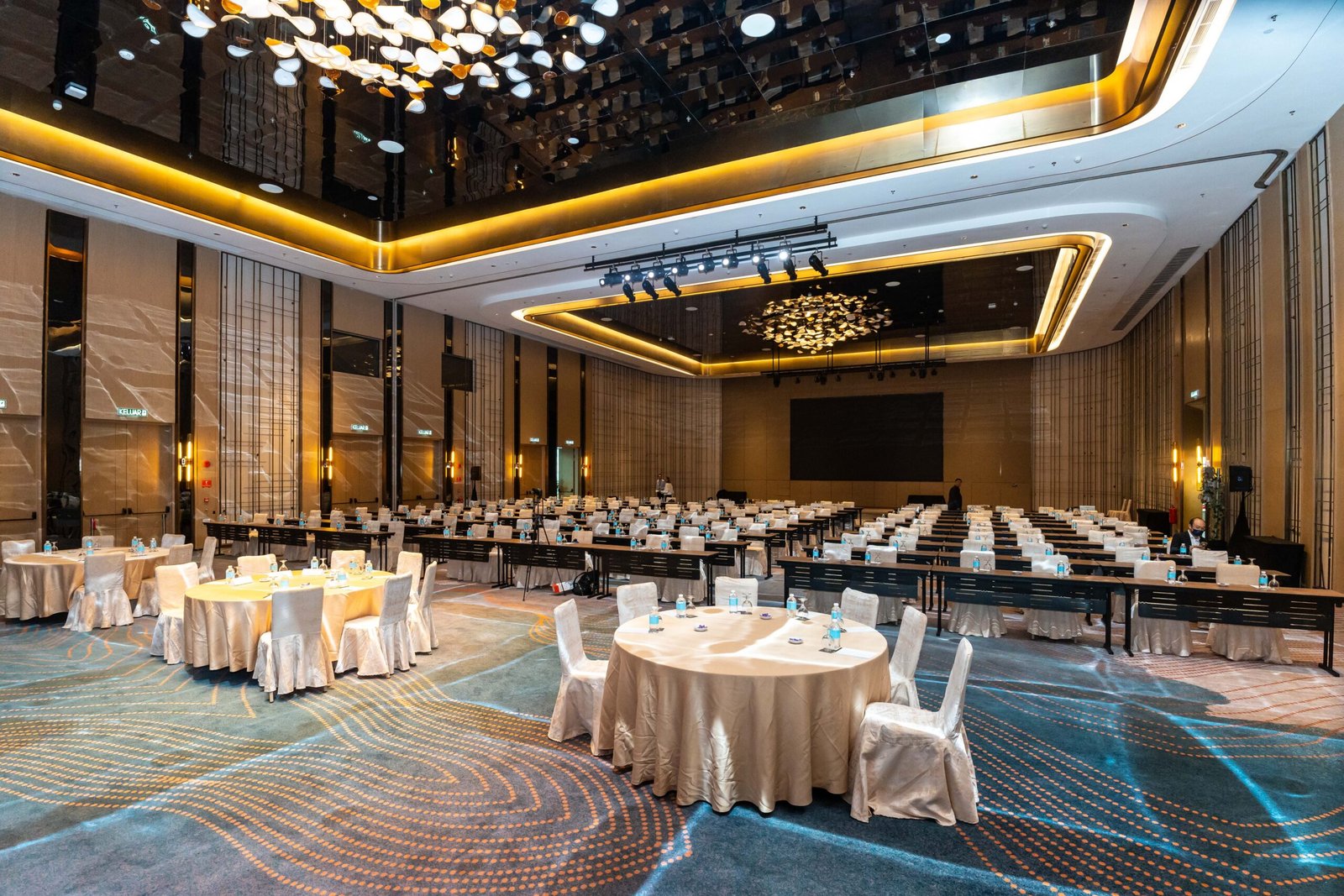
    Elegant ballroom setup with round tables, theater-style seating, and sophisticated gold-accented ceiling lighting before
    Elegant ballroom setup with round tables, theater-style seating, and sophisticated gold-accented ceiling lighting before

    The Real Cost of an In-House Event Executive in Malaysia

    A job ad salary is never the full cost of an in-house hire. Once you stack statutory contributions, leave, medical cover, and training on top of base pay, the real annual cost runs well above what’s advertised — and it’s a cost you carry every month, whether you run three events a year or thirty.

    Here’s what a fully-loaded in-house events hire typically costs a KL business each year:

    Cost Component What It Covers Typical Range
    Base salary — Event Executive Junior to mid-level in-house planner RM2,500 – RM4,000/month
    Base salary — Event Manager Senior, owns the full events calendar RM4,000 – RM8,000+/month
    Statutory on-costs EPF, SOCSO, EIS employer contributions Roughly 15% on top of base salary
    Leave, medical, training Annual leave, insurance, upskilling Varies by company policy
    Fully-loaded annual cost Fixed, whether you run 3 events or 30 Base salary plus ~15%, plus benefits

    Check current EPF and SOCSO/EIS employer rates directly with KWSP and PERKESO before finalising a budget — they’re reviewed periodically, and this table isn’t a substitute for the statutory schedule.

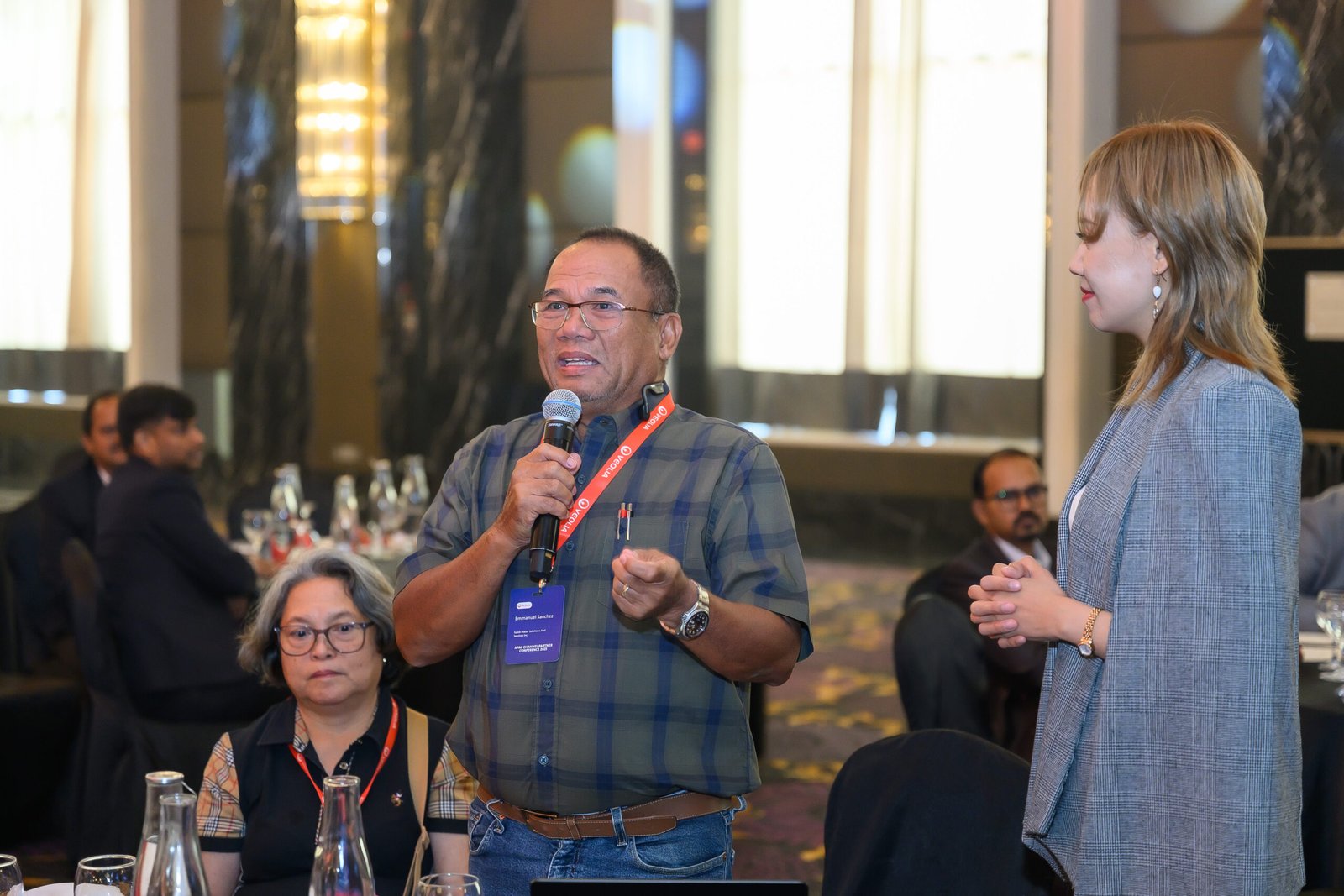
    Speaker with microphone engaging in panel discussion at corporate conference with attendees seated at tables
    Speaker with microphone engaging in panel discussion at corporate conference with attendees seated at tables

    What Event Management Companies in Malaysia Actually Charge

    An event management company’s fee usually shows up one of two ways: a percentage of your total event budget, or a flat production fee scoped to the brief. In Malaysia, agencies typically charge a management fee of 10% to 20% of the total event budget — the percentage usually drops as the total budget grows, since fixed costs like planning hours don’t scale linearly with spend.

    The percentage model works well when scope is still moving — you’re not locked into a number before the programme, venue, and production requirements are settled. A flat fee suits a well-defined brief, like a fixed-format annual dinner, where the deliverables rarely change once signed off.

    Either way, ask for an itemised quotation, not a single lump sum. A clear breakdown tells you what’s covered — venue liaison, vendor management, on-site crew, contingency — and what isn’t, so nothing gets billed as a “surprise” add-on two weeks before the event.

    The Hidden Costs of Running Events In-House

    A spreadsheet budget for a DIY event rarely includes the costs that show up once the event is actually running. These are the ones that catch first-time in-house planners off guard.

    The hidden costs that don’t make it onto the budget spreadsheet:

    • Vendor renegotiation losses — without repeat volume, in-house teams often pay rack rate instead of a negotiated rate
    • AV and production failures — a crashed presentation file or an unplayable video mid-show, with no backup plan on hand
    • Licensing and compliance gaps — permits and entertainment licences that are easy to miss until an event is already live
    • Staff time pulled off their day job — weeks of an HR or marketing executive’s time absorbed into logistics instead of their actual role

    In one project spanning everything from 50-pax executive dinners to a 20,000-pax-a-day, three-day carnival build in Bukit Jalil — work that has included supporting activations for brands like Red Bull across Malaysia — a client hadn’t applied for the required entertainment licence before doors opened. Our team had to manage the authority directly and get it resolved within hours, so the event kept running instead of shutting down. That’s the kind of gap a lean in-house team, running events only occasionally, can miss.

    How Many Events a Year Justifies Building an In-House Team?

    There’s a volume point where the maths flips. Below it, paying an agency’s management fee project by project costs less than carrying a full-time salary through the months without events. Above it, the fixed cost of an in-house hire starts to beat paying that fee every single time.

    As a general benchmark, organisations running 15 or more events a year tend to find an in-house events team more cost-effective than outsourcing project by project. Below that threshold, the agency fee on each event usually costs less than the idle months an in-house hire would otherwise be paid for.

    The number that matters isn’t just event count — it’s how concentrated your calendar is. A KL business running one big annual dinner and a handful of small townhalls is a very different case from one running a product launch every six weeks. Map your actual calendar for the year before assuming either model is “obviously” cheaper.

    In-House or Outsourced: A Decision Framework for KL Businesses

    Beyond the raw maths, a few practical questions decide the build-vs-buy call for most KL businesses.

    Run through these five questions before deciding which model fits your business:

    1. How many events do you run a year? Under 15, outsourcing usually wins on cost alone.
    2. How complex is the production? A boardroom townhall needs different skills than a stage-and-AV gala dinner — in-house teams rarely carry both.
    3. Does the event need multicultural or halal-status coordination? Confirm the venue’s or caterer’s halal status directly, and factor prayer-time scheduling into the programme flow — this takes local vendor relationships an in-house team may not have yet.
    4. Is it a one-off, like an annual dinner? A single event rarely justifies a year-round salary — outsourcing almost always wins here.
    5. Do you have spare internal capacity to absorb a bad week? If a launch video breaks on-site or a speaker changes their deck the morning of, someone needs to catch it without derailing the show.

    If most of your answers point toward low frequency, high production complexity, or one-off events, outsourcing is the lower-risk, lower-cost path. If you’re running a packed calendar of similar, repeatable events, building in-house starts to pay for itself.

    The SST and Tax Factor Most Businesses Miss

    Most budget comparisons stop at the headline fee and miss two factors that change the real after-tax cost: service tax, and how each cost is treated for tax purposes.

    Event management services in Malaysia are subject to service tax (SST), and it’s a non-recoverable cost — added on top of the agency’s fee, not something you claim back later. Always ask for SST to be itemised separately in the quotation, rather than folded into a single total, so you can see exactly what’s fee versus what’s tax.

    An in-house salary, on the other hand, carries its own payroll-related deductions that don’t apply to an agency invoice. Corporate event spending can also qualify for tax deduction depending on the expense type and purpose — but treatment varies, so this is a conversation for your accountant, not a blog post. What matters for the comparison is that neither option is “tax-neutral,” and skipping this step is how businesses end up comparing two numbers that were never apples-to-apples.

    ##### Suggested Internal Links

    ##### Ready to Plan Your Next Event?

    Weighing in-house against outsourcing is easier with a real quote to compare against. Send your event brief and get a straight answer on what it would take to outsource it.

    External References

    Frequently Asked Questions

    ###### Q: How much does it cost to hire an event management company in Malaysia compared to paying an in-house event executive’s salary? A: An event executive typically costs RM2,500–4,000 a month before EPF, SOCSO and EIS add roughly another 15%. Agencies usually charge 10–20% of the event budget — cheaper per event, but pricier once you’re running events year-round.

    ###### Q: How many events does a company need to run each year to justify hiring an in-house events team? A: As a general benchmark, running 15 or more events a year tends to make an in-house team more cost-effective than outsourcing each one. Below that, most KL businesses find it cheaper — and less risky — to outsource.

    ###### Q: Is it cheaper to outsource corporate events or hire a full-time event executive in Malaysia? A: A full-time executive is a fixed cost — salary plus EPF, SOCSO, EIS and idle months between events — whether you run three events or thirty. For most SMEs running under a dozen events a year, outsourcing works out cheaper overall.

    ###### Q: What are the hidden costs of managing a corporate event in-house? A: Vendor renegotiation losses, last-minute AV failures, and pulling staff off their day job for weeks are the costs that never make it into the budget spreadsheet. We’ve stepped in to rescue several DIY-planned events after these gaps surfaced too late.

    ###### Q: What is the average salary of an event executive or event manager in Malaysia? A: Event executives typically earn RM2,500–4,000 a month; event managers RM4,000–8,000 and up. Add EPF, SOCSO, EIS, leave and training, and the true annual cost runs well above the base salary alone.

    ###### Q: Do event management companies in Malaysia charge a flat fee or a percentage of the event budget? A: Malaysian event management companies typically charge 10% to 20% of the total event budget, though some quote a flat production fee instead. Ask for an itemised quotation so you can see exactly what the fee covers.

    ###### Q: Should a company build an in-house events team or outsource for a once-a-year annual dinner? A: For a single annual dinner, outsourcing almost always wins — you avoid carrying a year-round salary for one night’s work. Small-scale KL dinners for 50–100 guests typically run RM15,000–50,000 including the planner’s fee.

    ###### Q: Are event management services in Malaysia subject to SST, and is that cost recoverable? A: Yes, event management services are subject to service tax, and it’s a non-recoverable cost added on top of the fee. Ask your contractor to itemise SST separately in the quotation rather than bury it in the total.

    ###### Q: Is spending on a corporate event tax-deductible in Malaysia? A: Corporate event costs can qualify for tax deduction, but treatment varies by expense type and purpose — check with your accountant on what applies before comparing after-tax costs.

    Andrew Chu is Technical Event Director at Shockwave, with 17 years managing corporate events across Malaysia.